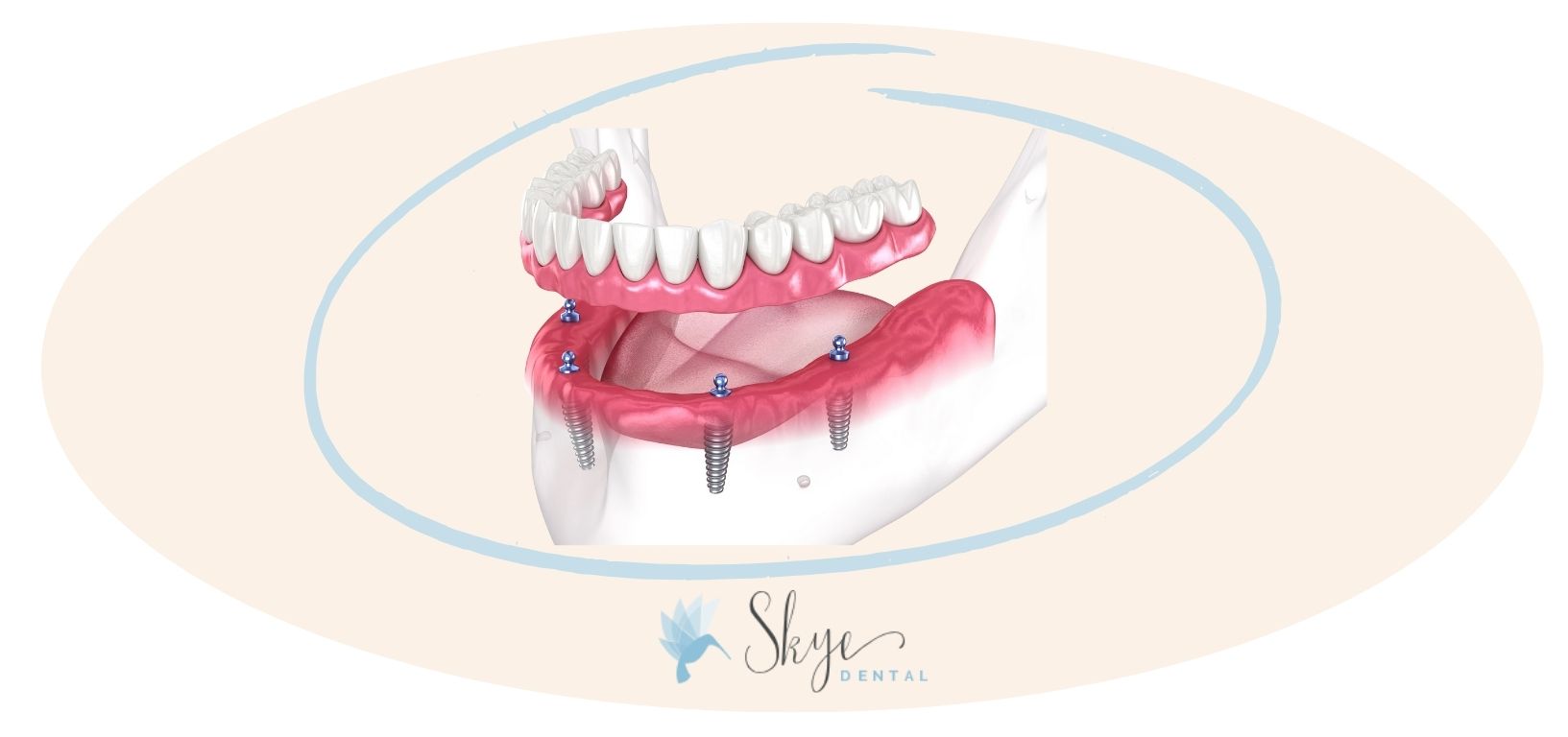
There is more than one approach to full-mouth dental implant treatment. For patients who have multiple missing, failing or heavily restored teeth, understanding the practical differences between All-On-X and traditional full-mouth dental implants is an important part of informed decision-making. Each approach involves distinct surgical planning, treatment stages, healing considerations and long-term maintenance requirements.
This article provides a factual comparison to help patients assess which option may align with their clinical needs, oral health status and personal circumstances. Suitability depends on individual assessment and cannot be determined without professional consultation.
What Is All-On-X Implant Treatment
All-On-X is a full-arch dental implant treatment concept where a fixed prosthesis is supported by a specific number of strategically placed implants. The "X" in All-On-X reflects flexibility in the number of implants used, which is determined by factors such as bone quality, bone volume, arch anatomy and the specific clinical protocol being followed.
The approach typically involves placing implants at precise angles to maximise contact with available bone and avoid areas where bone density or volume may be insufficient. In many cases, a provisional prosthesis can be attached shortly after implant placement, though this depends on implant stability and individual healing capacity.
All-On-X is designed to support a fixed, non-removable restoration for an entire upper or lower arch when clinically appropriate. The prosthesis remains in place and is cleaned around rather than removed for daily hygiene. The number of implants used and the treatment timeline vary based on individual assessment and clinical planning.
What Are Traditional Full-Mouth Dental Implants
Traditional full-mouth dental implants involve placing individual implants to replace missing teeth or support full-arch restorations. The number of implants used depends on how many teeth require replacement and the type of restoration being planned.
Traditional implant treatment typically follows a staged approach. Implants are placed surgically and allowed to integrate with the bone over a period of weeks or months before the final restoration is attached. During this healing period, patients may wear a temporary restoration or denture.
Traditional implants can support various types of restorations, including individual crowns, bridges or full-arch prostheses. The treatment plan is tailored to the number of missing teeth, the condition of remaining teeth, bone structure and the patient's functional and aesthetic goals.
Side-by-Side Comparison
| Aspect |
All-On-X Implants
|
Traditional Full-Mouth Implants |
| Number of implants |
Often four to six implants per arch, depending on protocol and anatomy |
Variable, often six to ten or more per arch depending on restoration type and clinical needs |
| Surgical approach |
Implants placed at strategic angles to utilise available bone; may involve guided surgery |
Individual implants placed in positions corresponding to teeth being replaced; may involve bone grafting if required |
| Treatment stages |
May involve provisional restoration shortly after surgery, followed by final prosthesis once healing is confirmed |
Often involves implant placement, healing period, then attachment of final restoration in separate stages |
| Overall timeline |
Timeline varies based on healing, bone integration and individual response; provisional and final stages may be separated by several months |
Timeline varies based on number of implants, healing capacity and whether grafting is required; typically involves months between stages |
|
Healing considerations
|
Healing depends on implant stability, bone quality and general health; provisional prosthesis requires careful management during integration period |
Healing occurs during undisturbed integration period; temporary restorations worn separately from implant sites |
| Maintenance and hygiene access |
Fixed prosthesis cleaned around using interdental brushes, floss threaders or water flossers; professional cleaning required at regular intervals |
Access depends on restoration type; individual crowns cleaned like natural teeth; full-arch restorations may require specialised tools |
| Cost considerations |
Cost varies based on number of implants, materials used, laboratory work and complexity of case; may differ from traditional approach depending on individual treatment needs |
Cost varies based on number of implants, restoration type, surgical complexity and whether additional procedures such as grafting are required |
Healing and Recovery Considerations
Healing timelines for full-mouth dental implant treatment vary based on the approach used, the quality and volume of bone, general health and individual response to surgery. All-On-X treatment may involve a provisional prosthesis shortly after surgery, though this depends on achieving adequate implant stability at the time of placement. The provisional prosthesis serves a functional and aesthetic purpose during the healing period but requires careful use to avoid excessive force on the implants.
Traditional implant treatment typically involves a healing period during which implants integrate with the bone without being loaded by a restoration. Temporary dentures or bridges may be worn during this time but are not directly attached to the implants. The duration of this healing phase varies, and clinical assessment is required to determine when the implants are ready to support a final restoration.
Both approaches require adherence to post-surgical care instructions, which may include dietary modifications, oral hygiene protocols and medications to manage discomfort or prevent infection. Follow-up appointments are necessary to monitor healing and assess implant integration. Complications such as infection, implant mobility or delayed healing can occur with any implant treatment and may require additional intervention.
Individual factors such as smoking, diabetes, immune conditions and bone quality influence healing outcomes. Your dentist will discuss these factors during your consultation and explain what to expect based on your specific circumstances.
Maintenance and Long-Term Care
Both All-On-X and traditional full-mouth dental implants require ongoing professional reviews and daily oral hygiene to maintain implant health and prevent complications such as peri-implantitis, an inflammatory condition that affects the tissues around implants.
All-On-X restorations are fixed and cannot be removed by the patient. Daily cleaning involves using interdental brushes, floss threaders or water flossers to clean around the prosthesis and along the gum line. Access to certain areas may be more difficult than with natural teeth, and technique is important to ensure thorough cleaning. Professional cleaning and examination are required at regular intervals to remove deposits that cannot be managed at home and to assess the condition of the implants and surrounding tissues.
Traditional full-mouth implants supporting individual crowns or bridges are cleaned similarly to natural teeth, using a toothbrush and floss. Full-arch restorations supported by traditional implants may require specialised cleaning tools depending on the design of the prosthesis. Professional maintenance visits are necessary to monitor implant stability, bone levels and soft tissue health.
The longevity of dental implants depends on factors including oral hygiene, professional maintenance, bone quality, general health and individual habits such as grinding or clenching. Implants are not immune to complications, and ongoing care is essential to reduce the risk of problems over time.
Which Option May Suit You
No single implant approach suits every patient. The choice between All-On-X and traditional full-mouth dental implants depends on clinical assessment of your bone structure, oral health, medical history and treatment goals.
All-On-X may be considered for patients who have sufficient bone in specific locations to support strategically angled implants and who are seeking a fixed, full-arch restoration. It may also be discussed for patients who wish to minimise the number of surgical sites or who have bone loss in certain areas that makes individual implant placement more complex.
Traditional full-mouth dental implants may be considered for patients who require replacement of specific teeth, those who have good bone volume throughout the arch, or those who prefer a staged treatment approach with a healing period before final restoration. Traditional implants may also be appropriate for patients who have existing healthy teeth that do not require removal.
Some patients may not be suitable candidates for either approach without additional procedures such as bone grafting, sinus lifting or treatment of active gum disease. Medical conditions, medications and lifestyle factors also influence suitability and must be assessed during consultation.
Your dentist will explain which options are clinically appropriate for your situation, what each involves and what outcomes can reasonably be expected. This discussion should include the risks, benefits and limitations of each approach, as well as alternative treatment options if applicable.
Conclusion
All-On-X and traditional full-mouth dental implants represent different approaches to tooth replacement, each with distinct procedural steps, healing timelines and maintenance requirements. Understanding these differences supports informed decision-making, but clinical suitability can only be determined through individual assessment.
If you are considering full-mouth dental implant treatment, a consultation provides an opportunity to discuss your options, review your oral health and medical history, and receive guidance tailored to your specific needs.
Skye Dental provides comprehensive dental implant consultations and treatment planning to support patients considering full-arch tooth replacement options.
If you are considering full-mouth dental implants, book a consultation with Skye Dental to discuss which treatment option may be suitable for your individual needs.
Disclaimer: Any surgical or invasive procedure carries risks. Before proceeding, you should seek a second opinion from an appropriately qualified health practitioner.
About the author

Dr. Jena Ward is the principal dentist and owner of Skye Dental. She graduated dentistry with first class honours from Griffith University. She won the award for Clinical Excellence in Endodontics following her extensive research into root canal therapy. Previously she graduated with a BSc majoring in Biomedicine from Auckland University. After graduating she worked rurally, focusing on Neuromuscular, Aesthetic, Reconstructive and Implant Dentistry before opening Skye Dental. Jena keeps up to date with numerous conferences, and utilises the latest technology, including 3D CAD/CAM. Her special interests include Invisalign (an almost invisible option to straighten teeth), root canal therapy, and cosmetic dentistry, including Implants. She works with a lot of phobic patients, and offers Twilight Sedation.
Originally from Brisbane, raised in Hong Kong Jena has lived in eight different countries and relates easily to all patients. Her patients travel to see her, from interstate and even overseas. Jena enjoys spending time with her family, sailing and volunteering her dental services overseas in third world countries.